Lesson Description
Technical knowledge may help you get a job, but communication skills often determine how far you grow in your career. Whether you are attending a job interview, networking at a conference, building your personal brand on LinkedIn, participating in virtual meetings, or communicating with clients and colleagues, your ability to present yourself professionally creates opportunities.
Today’s employers look beyond qualifications. They value professionals who can communicate clearly, collaborate effectively, solve problems, adapt to change, and represent their organizations with confidence and integrity.
In this lesson, you will learn how to communicate effectively during interviews, build meaningful professional relationships, create a strong personal brand, and use AI responsibly to support your career development in a competitive global job market.
Learning Objectives
By the end of this lesson, you will be able to:
- Prepare for professional job interviews.
- Answer interview questions with confidence.
- Build and maintain a professional network.
- Develop a credible personal brand.
- Communicate effectively during career opportunities.
- Use AI tools ethically for career development.
- Present yourself professionally in both physical and digital environments.
1. Why Career Communication Matters
Career success depends on more than technical expertise.
Employers value professionals who can:
- Explain ideas clearly.
- Collaborate with teams.
- Communicate with customers.
- Solve problems.
- Lead discussions.
- Represent the organization professionally.
Communication builds opportunities.
Where Career Communication Matters
Strong communication is essential during:
- Job interviews
- Resume discussions
- Networking events
- Team meetings
- Client presentations
- Performance reviews
- Leadership opportunities
- Professional conferences
- Online meetings
- Social media interactions
Every interaction contributes to your professional reputation.
2. Preparing for Job Interviews
An interview is a professional conversation designed to determine whether your skills, experience, and personality match the role.
Preparation significantly improves confidence.
Before the Interview
Research:
- The company.
- Its products or services.
- Industry trends.
- Job responsibilities.
- Company values.
- Recent achievements.
Preparation demonstrates professionalism and genuine interest.
Prepare Your Stories
Interviewers often ask about real experiences.
Use the S.T.A.R. Method:
S – Situation
Describe the context.
↓
T – Task
Explain your responsibility.
↓
A – Action
Describe what you did.
↓
R – Result
Share the outcome and what you learned.
This method provides clear and structured answers.
3. Answering Interview Questions
Common questions include:
- Tell me about yourself.
- Why do you want this role?
- What are your strengths?
- Describe a challenge you solved.
- Tell us about a time you worked in a team.
- Where do you see yourself in five years?
Best Practices
- Answer honestly.
- Stay focused.
- Give specific examples.
- Maintain eye contact.
- Speak clearly.
- Avoid memorized responses.
Authenticity creates stronger impressions.
4. Professional Networking
Networking is the process of building genuine professional relationships.
It is not simply collecting contacts.
Strong professional relationships create:
- Career opportunities.
- Learning opportunities.
- Mentorship.
- Partnerships.
- Business growth.
Networking is about giving value before asking for help.
Networking Tips
- Introduce yourself confidently.
- Ask thoughtful questions.
- Listen actively.
- Follow up professionally.
- Stay connected.
- Share useful information.
- Express appreciation.
Relationships grow through consistency.
5. Building Your Personal Brand
Your personal brand is how others perceive you professionally.
It reflects:
- Your communication.
- Your expertise.
- Your behavior.
- Your reliability.
- Your values.
Your reputation is built over time through consistent actions.
Components of a Strong Personal Brand
- Professional communication.
- Continuous learning.
- Ethical behavior.
- Reliability.
- Positive online presence.
- Expertise.
- Helpful attitude.
Your personal brand should reflect who you truly are.
6. Digital Professionalism
Employers often interact with candidates online.
Professional digital behavior matters.
Best Practices
Maintain:
- A professional email address.
- An updated LinkedIn profile.
- Respectful online communication.
- Professional profile photos.
- Appropriate social media content.
Everything you publish contributes to your digital reputation.
7. Communicating During Career Growth
As careers progress, communication responsibilities increase.
Professionals communicate during:
- Performance reviews.
- Promotions.
- Salary discussions.
- Leadership meetings.
- Mentoring.
- Team management.
Strong communicators become trusted leaders.
8. Using AI for Career Development
Artificial Intelligence can support career growth by helping with:
- Resume improvement.
- Cover letter drafting.
- Interview practice.
- Skill assessment.
- Career planning.
- Presentation preparation.
- Grammar correction.
Use AI as a learning partner—not as a replacement for your authentic experiences.
Ethical AI Use
Always ensure:
- Your resume is truthful.
- Interview answers reflect your own experiences.
- AI-generated content is reviewed carefully.
- Personal information is protected.
Integrity builds long-term careers.
9. Continuous Professional Growth
Successful professionals never stop learning.
Develop:
- Communication skills.
- Leadership.
- Digital literacy.
- Emotional intelligence.
- Industry knowledge.
- Cultural awareness.
Learning is a lifelong career advantage.
10. Creating Career Opportunities
Career opportunities often come through:
- Strong communication.
- Professional relationships.
- Consistent performance.
- Positive reputation.
- Continuous learning.
- Initiative.
People remember professionals who communicate with confidence, respect, and reliability.
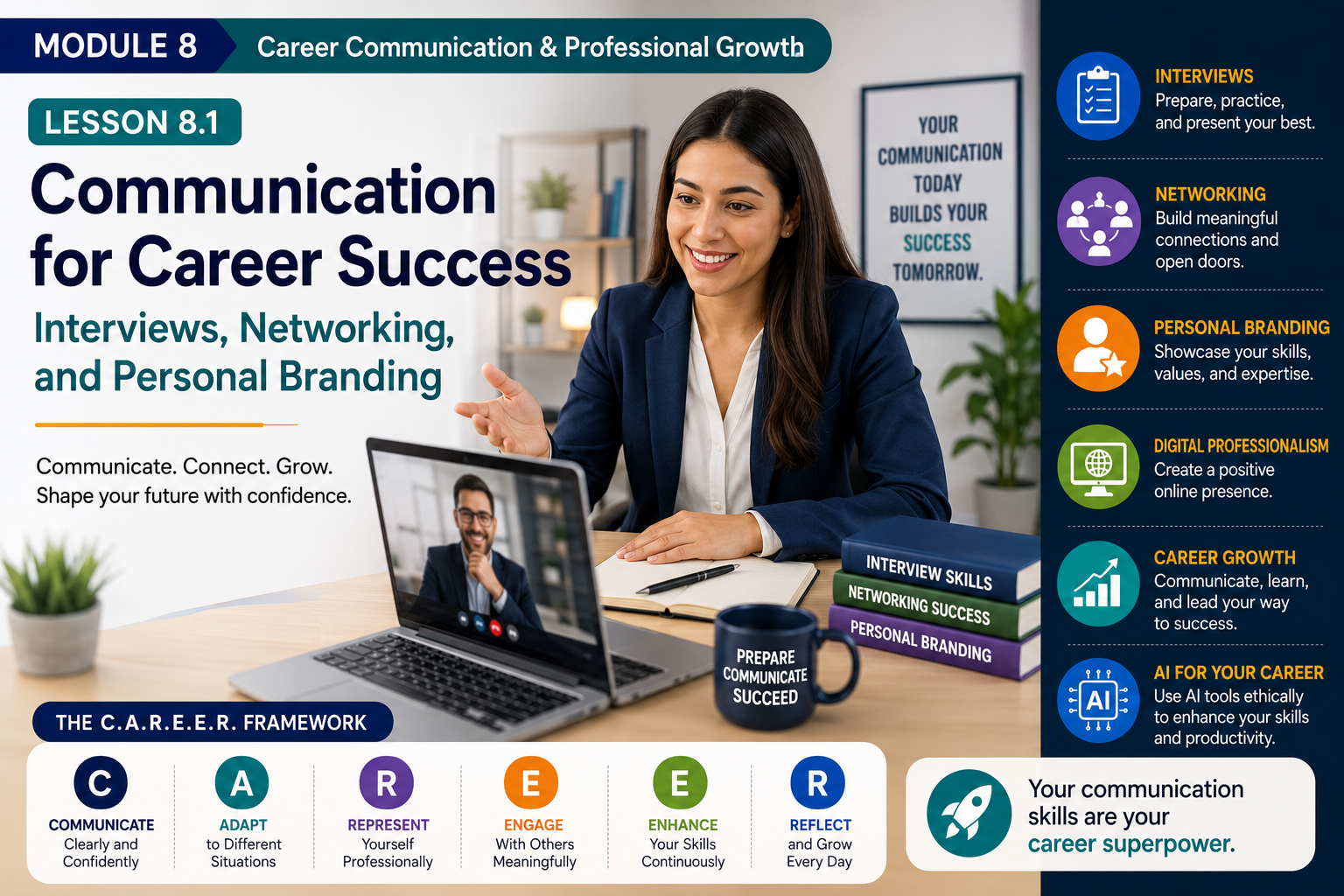
The C.A.R.E.E.R. Framework
Use the C.A.R.E.E.R. Framework to guide your professional communication.
C — Communicate Clearly
Express ideas confidently and professionally.
↓
A — Adapt to Different Situations
Adjust your communication for interviews, meetings, and networking.
↓
R — Represent Yourself Professionally
Maintain integrity, reliability, and professionalism.
↓
E — Engage With Others
Build genuine professional relationships.
↓
E — Enhance Your Skills
Continue learning and improving.
↓
R — Reflect and Grow
Learn from feedback and every professional experience.
Real-World Scenario
James is applying for a project management position at an international technology company.
Before the interview, he researches the organization, studies the job description, and practices answering common interview questions using the S.T.A.R. Method. During the interview, he speaks confidently, shares real examples from previous projects, asks thoughtful questions about the role, and follows up with a professional thank-you email.
Although several candidates have similar technical qualifications, James receives the job offer because he demonstrates clear communication, professionalism, preparation, and genuine interest in the company.
His communication skills become the deciding factor.
Career Communication Blueprint
Prepare Thoroughly
↓
Research the Organization
↓
Communicate Clearly
↓
Build Genuine Relationships
↓
Develop Your Personal Brand
↓
Use AI Responsibly
↓
Continue Learning
↓
Grow Your Career
Key Takeaways
- Career success depends on both technical expertise and strong communication skills.
- Interview preparation increases confidence and performance.
- The S.T.A.R. Method helps structure clear and compelling interview answers.
- Networking is about building authentic, long-term professional relationships.
- Your personal brand is shaped by your communication, behavior, and reliability.
- Digital professionalism is an essential part of your career reputation.
- AI can support career development but should never replace honesty or authenticity.
- Continuous learning strengthens career opportunities and leadership potential.
- The C.A.R.E.E.R. Framework provides a practical roadmap for professional growth.
- Clear, ethical, and confident communication opens doors throughout your career.
Practice Activity
Imagine you are preparing for an interview with your dream company.
Complete the following exercise using the C.A.R.E.E.R. Framework:
- Research the company and identify its mission, products, and values.
- Prepare answers to three common interview questions using the S.T.A.R. Method.
- Write a 60-second professional self-introduction (your “elevator pitch”).
- List five strengths you would highlight during the interview.
- Identify one communication skill you want to improve over the next month and create a plan to practice it.
After completing the exercise, ask yourself:
- Did I communicate confidently and honestly?
- Did I provide specific examples rather than general statements?
- Does my personal brand reflect the professional I want to become?
- What one action can I take this week to strengthen my career communication?
Career opportunities often begin with a conversation. The professionals who prepare well, communicate clearly, and build trust consistently are the ones who stand out and achieve long-term success.