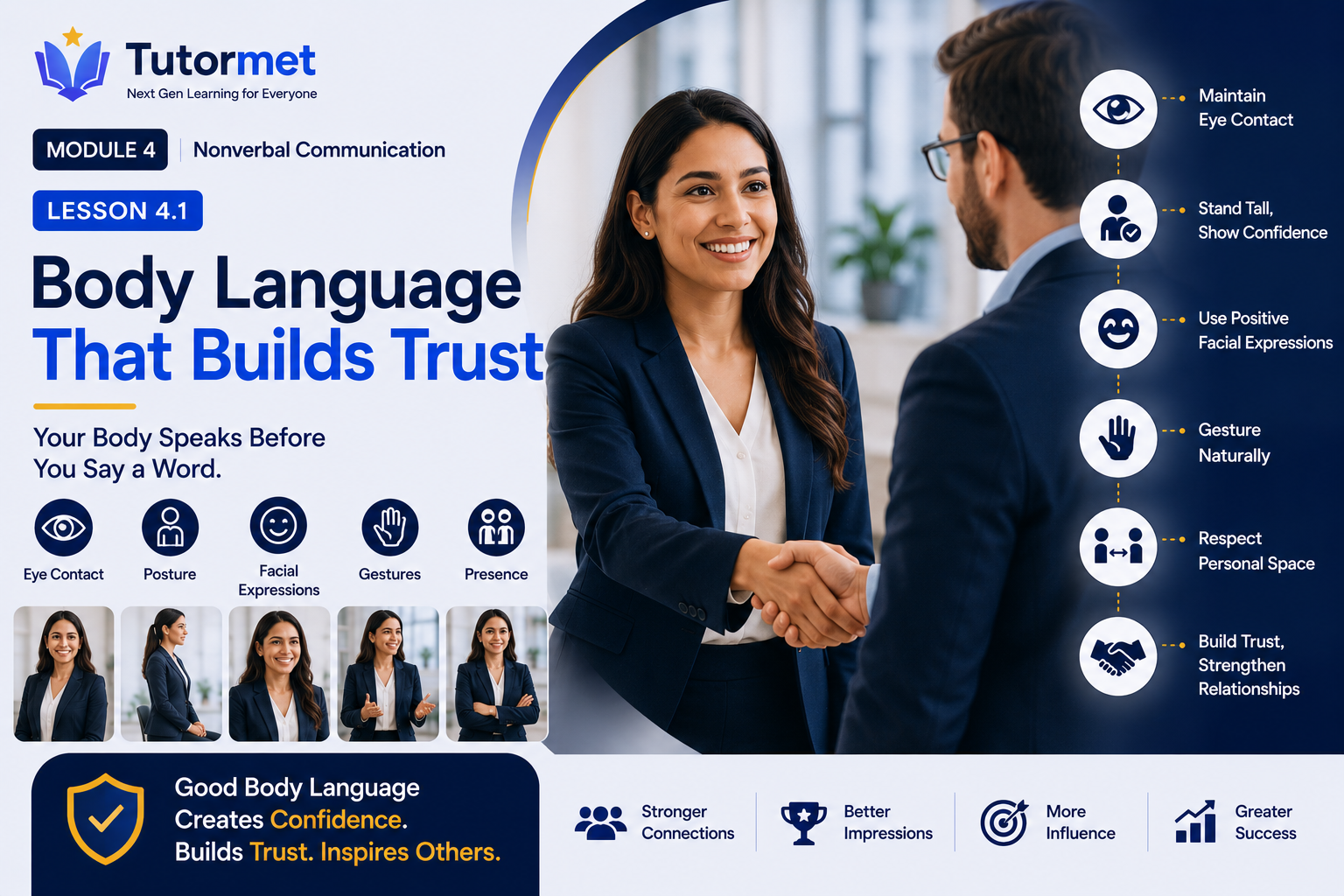
Lesson Description
Communication is not limited to the words we speak. Every smile, gesture, posture, facial expression, and movement sends a message. In many situations, people form opinions about us before we even begin speaking.
Body language, also known as nonverbal communication, plays a significant role in building trust, expressing confidence, strengthening relationships, and creating positive first impressions. Whether you’re attending a job interview, delivering a presentation, leading a meeting, networking at a conference, or having a casual conversation, your body language can either reinforce or contradict your spoken message.
This lesson explores the science of body language and provides practical techniques to help you communicate confidence, credibility, and professionalism through your nonverbal behaviour.
Learning Objectives
By the end of this lesson, you will be able to:
- Understand the importance of nonverbal communication.
- Recognise the major components of body language.
- Use eye contact effectively.
- Improve posture and physical presence.
- Communicate through positive facial expressions.
- Use gestures naturally and purposefully.
- Build trust and confidence through nonverbal communication.
1. Understanding Nonverbal Communication
Nonverbal communication is the exchange of information without using spoken or written words.
It includes:
- Facial expressions
- Eye contact
- Posture
- Hand gestures
- Body movements
- Personal space
- Appearance
- Tone of voice
- Physical presence
Your body often communicates before your words do.
For example:
Imagine a speaker saying,
“I’m excited to be here today.”
If they avoid eye contact, speak quietly, cross their arms, and appear disengaged, the audience is likely to question the sincerity of the message.
Effective communication requires consistency between verbal and nonverbal messages.
Why Body Language Matters
Positive body language helps you.
- Build trust
- Create strong first impressions
- Increase credibility
- Improve leadership presence
- Enhance teamwork
- Show confidence
- Strengthen relationships
- Improve audience engagement
People often remember how you made them feel more than the exact words you used.
2. Eye Contact
Eye contact is one of the most powerful forms of nonverbal communication.
Appropriate eye contact communicates:
- Confidence
- Honesty
- Respect
- Interest
- Attention
Benefits of Good Eye Contact
When used naturally, eye contact:
- Builds trust
- Encourages connection
- Shows active listening
- Increases audience engagement
- Demonstrates confidence
Common Mistakes
Avoid:
- Looking at the floor
- Constantly looking away
- Staring intensely
- Frequently checking your phone
- Looking distracted
Balance is important.
Natural eye contact feels comfortable rather than forced.
Practical Tip
When speaking to a group, gradually shift your eye contact among different people rather than focusing on one individual.
During one-on-one conversations, maintain regular but relaxed eye contact.
3. Facial Expressions
The human face communicates emotions instantly.
A genuine smile can make people feel welcome, while a tense expression may unintentionally create discomfort.
Positive Facial Expressions
Examples include:
- Natural smile
- Relaxed face
- Raised eyebrows when showing interest
- Responsive expressions
These signals indicate openness and engagement.
Matching Expression to Message
If discussing serious topics, your expression should reflect professionalism.
If celebrating success, enthusiasm should be visible.
Your facial expression should support—not contradict—your words.
4. Posture
Posture communicates confidence before you even begin speaking.
Confident Posture
Stand or sit:
- Upright
- Relaxed
- Balanced
- Shoulders back
- Head level
Good posture improves breathing, voice projection, and overall presence.
Poor Posture
Examples include:
- Slouching
- Looking down constantly
- Leaning excessively
- Crossing arms defensively
Poor posture may unintentionally communicate insecurity, boredom, or disinterest.
Professional Presence
Whether standing in front of an audience or sitting in a meeting, maintaining an open and balanced posture creates a more positive impression.
5. Hand Gestures
Natural gestures help reinforce your message.
They add emphasis, energy, and clarity.
Effective Gestures
Use gestures that:
- Feel natural
- Match your words
- Emphasize key ideas
- Stay within a comfortable range
Gestures should support communication—not distract from it.
Gestures to Avoid
Avoid:
- Pointing aggressively
- Constant fidgeting
- Crossing arms throughout the conversation
- Keeping hands hidden continuously
- Repetitive movements
Controlled gestures make communication more engaging.
6. Personal Space
People have different comfort levels regarding physical distance.
Respecting personal space demonstrates professionalism and cultural awareness.
General Guidelines
During professional conversations:
- Stand at a comfortable distance.
- Avoid invading someone’s personal space.
- Respect cultural differences regarding proximity.
When uncertain, allow the other person to determine the comfortable distance.
7. First Impressions
First impressions are influenced by both verbal and nonverbal communication.
Although first impressions can change, they often shape future interactions.
Elements of a Positive First Impression
- Appropriate appearance
- Genuine smile
- Good posture
- Calm voice
- Eye contact
- Professional attitude
- Respectful behavior
Together, these elements create credibility and trust.
8. Reading Other People’s Body Language
Communication is a two-way process.
Learning to observe others improves understanding.
Look for:
- Facial expressions
- Changes in posture
- Eye contact
- Hand movements
- Overall engagement
Remember:
Body language should always be interpreted within context.
Avoid making assumptions based on a single gesture.
For example, crossed arms may indicate discomfort, cold weather, or simply a comfortable resting position.
9. Body Language Across Cultures
Body language is not universal.
Different cultures interpret gestures differently.
Examples include:
- Eye contact expectations
- Hand gestures
- Personal space
- Greetings
- Physical touch
Global professionals should remain respectful and adaptable.
When communicating internationally:
- Observe carefully.
- Avoid assumptions.
- Respect cultural differences.
- Ask questions when appropriate.
Cultural intelligence strengthens communication.
10. Building Trust Through Body Language
Trust develops when verbal and nonverbal communication align.
Trust-building behaviours include the following:
- Maintaining appropriate eye contact.
- Smiling naturally.
- Listening attentively.
- Using open posture.
- Nodding when appropriate.
- Remaining calm under pressure.
- Showing genuine interest.
Authenticity is more effective than trying to “perform” confidence.
Body Language Blueprint
Use the T.R.U.S.T. Framework to improve your nonverbal communication.
T — Take an open posture.
Stand or sit confidently with relaxed shoulders.
↓
R — Respect Personal Space
Maintain appropriate distance and cultural sensitivity.
↓
U — Use Natural Gestures
Support your message with controlled hand movements.
↓
S — Smile and Show Interest
Use positive facial expressions and attentive eye contact.
↓
T — Tune Into Others
Observe body language, listen actively, and respond appropriately.
Real-World Scenario
Sophia is attending a job interview.
She enters the room with an upright posture, smiles naturally, makes comfortable eye contact, greets the interviewer politely, and listens attentively.
During the interview, she uses natural hand gestures, maintains a calm tone, and nods while listening.
Although another candidate has similar technical qualifications, Sophia leaves a stronger impression because her body language communicates confidence, professionalism, and genuine interest.
Her nonverbal communication reinforces everything she says.
Key Takeaways
- Body language is a powerful form of nonverbal communication.
- Eye contact, posture, facial expressions, gestures, and personal space all influence how messages are perceived.
- Positive body language builds trust, confidence, and credibility.
- Consistency between verbal and nonverbal communication increases authenticity.
- Good posture and natural gestures improve professional presence.
- Respecting personal space demonstrates professionalism and cultural awareness.
- Body language should always be interpreted within context rather than based on isolated gestures.
- Cultural differences influence nonverbal communication, making adaptability an important global communication skill.
- Authenticity and genuine interest are more effective than forced or exaggerated body language.
Practice Activity
Over the next three days, consciously observe and improve your body language during conversations.
Choose one professional or personal interaction each day and focus on:
- Maintaining comfortable eye contact.
- Standing or sitting with good posture.
- Using natural facial expressions.
- Avoiding distracting gestures.
- Respecting personal space.
- Listening attentively while showing engagement through nonverbal cues.
After each interaction, reflect on the following:
- Did your body language match your spoken message?
- Did the other person appear comfortable and engaged?
- Which nonverbal habit felt most natural?
- Which area would you like to improve?
Consistent awareness and practice will help you develop body language that builds trust, strengthens relationships, and enhances your communication effectiveness.